
Transforming Infrastructure
Is deglobalisation the answer to volatility for infrastructure investors?

The world has seen major changes and a series of seismic shifts in the last half decade. Be it a pandemic, the war in Ukraine, the rise of interest rates and inflation, and more recently escalating geopolitical and trade tensions – each event has left a lasting imprint on global markets. For investors, these disruptions have not only tested resilience but also reshaped the investment landscape.
Traditionally, the ‘Three Ds’ have guided infrastructure investing: Decarbonisation, Digitalisation, and Demo- graphics. More than 40 years after Harvard professor Theodore Levitt used the term “Globalisation of markets”1 for the first time in an article describing a development that has been driving markets around the world, a fourth “D” has emerged with increasing importance: Deglobalisation.
In a world that seems to have become more volatile and unpredictable it is challenging for long-term investors who are busier than ever managing uncertainty.
Deglobalisation drives developments
We live in a globalised world which is the driver of prosperity. Globalisation is not over, it is just changing, and investors need to be able to adapt. It is hence important to preserve and seize the benefits of interconnected markets while managing the risks of dependency.
The global economy is becoming increasingly fragmented. Tariffs, reshoring, and rising defence expenditures are replacing the once-prevailing narrative of open markets and global supply chains. Today, geopolitical tensions and supply chain vulnerabilities have prompted a shift towards more national self-reliance.
This shift is particularly consequential for export-oriented economies. Countries that once thrived on global demand now face the challenge of adapting to a more localized economic model. Also, for infrastructure investors, this means a renewed focus on domestic resilience – from energy independence to secure digital networks and robust healthcare systems. This development could lead to more and new investment opportunities with countries investing more into their national energy infrastructure to improve their energy safety and independence or to accelerate their decarbonisation path.
Deglobalisation is not just a macroeconomic trend, it is the result of recent political as well as economic developments. And we need to be able to respond to them. Some governments across Europe and the U.S., that recently have come to power, are responding with ambitious infrastructure agendas. But it is not one size fits all.
Areas in focus – from digitalisation to transportation

Source: Allianz Global Investors, JP Morgan, as at 25 November 2025
Key areas of focus include:
• Energy security: Many countries continue to walk their decarbonisation paths. In Asia for example we see a stronger push for projects that help drive or accelerate the energy transition. The drive for decarbonisation now aligns with national security goals. Countries are investing in local renewable energy sources to reduce dependency on foreign suppliers, lower costs, and enhance energy resilience while reducing their dependence on fossil fuels. This is in particular relevant for countries and regions that rely on energy imports from other countries and can help to boost competitiveness through cheaper energy prices, e.g. through an interconnector or smart energy solutions.
• AI & digitalisation: Digital infrastructure is a core infrastructure and an essential service for the public. High-speed internet and reliability of mobile networks are key for the economic and social development of countries. But there are huge differences between Asia and Europe as well as within Europe regarding the digitisation level of countries. In addition, the rise of AI and data-intensive applications is driving demand for energy-hungry data centres. The flow of data is global but the infrastructure to allow for the “transport” of data is something more local that many countries have on their agenda. Beyond that, digital development comes with the need for more data centres and energy – ideally supplied by green sources.

*Demand is measured by power consumption to reflect the number of servers a data center can house. Demand includes megawatts for storage, servers and networks. Source: Why invest in the data center economy, McKinsey
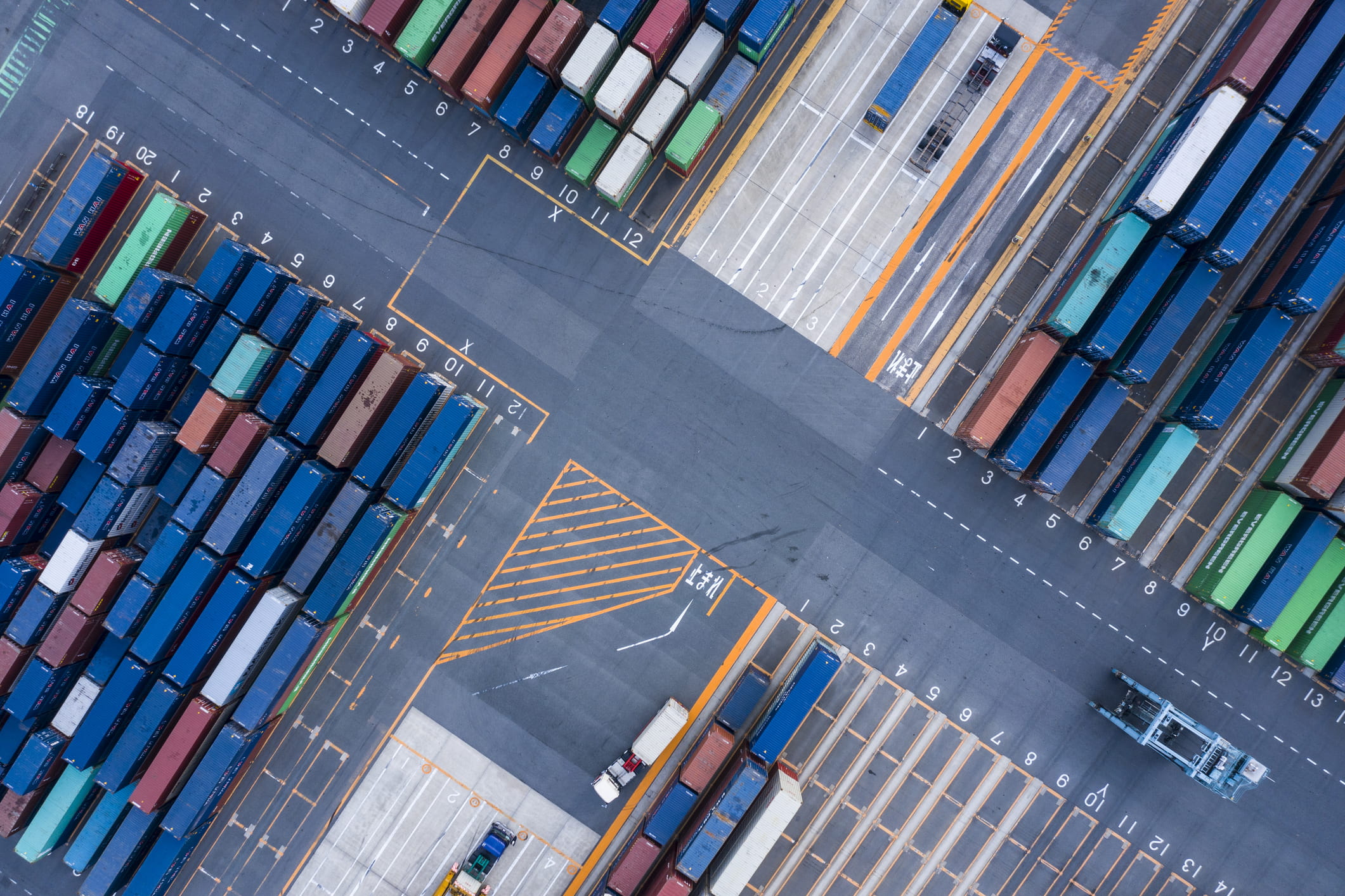
• Transportation: The movement of goods across the globe is a fundamental driver of economies and trade. Recent escalations – such as supply chain disruptions and tariff conflicts – have significantly impacted the delivery of goods and affected industries worldwide. To adapt, companies must explore alternative ways to source materials and components. The transportation sector plays a crucial role in maintaining supply chain efficiency and is also central to global decarbonisation efforts.
• Urbanisation: Globalisation has fuelled this trend. According to the UN, for the first time in 300,000 years of human history, more people live in cities than in rural areas. And this development is expected to continue. In line with this shift and more dense cities, infrastructure such as roads, bridges, and public transport including for example local trains must be modernised and upgraded to meet the demands of urban life and provide a compelling alternative to car travel. Also, water and energy utilities were usually not built to cater for such a large population and often cannot keep up with the growth in big cities. Consequently, this will require investments for the expansion. Same goes for rural areas that in some countries lag behind when it comes to connectivity. Investments can bridge that gap.
• Strategic manufacturing: The Covid-19 pandemic made the vulnerabilities in medical supply chains in the healthcare and pharmaceutical sectors visible to anyone and raised awareness for the downside of globalisation. From giga factories to semiconductor plants, nations are reshoring critical industries to ensure supply chain continuity and independence from other countries that could be affected from geopolitical volatilities.
Recent trade wars and political developments might prevail for longer and investors can play an important role here to support national strategies. Public private partnerships can be a good way to join forces and competencies.
More impact of infrastructure investors
For long-term investors, this evolving landscape with deglobalisation presents both challenges and opportunities. Infrastructure is seen as a strategic asset class – one that can drive national priorities while offering stable and long-term returns.
Governments are aware of the role of infrastructure and the huge gap in some areas. Given tight national budgets, many countries around the world are struggling with that, but private capital can help to untie this knot. Institutional investors that often represent life policy holders and pensioners can contribute two-fold here – to the national infrastructure and the retirement provisions.
Cumulative infrastructure investment is expected to reach as high as USD 106 trillion by 2040

Note: Figures do not sum, because of rounding.
Source: Investing in the infrastructure of modern society , McKinsey; Food and Agriculture Organization; Global Infrastructure Hub; International Energy Agency; International Monetary Fund; Organisation for Economic Co-operation and Development; Preqin; United Nations; World Bank; World Economic Forum.
Debt strategies, for instance, are gaining traction. In more volatile times, disciplined risk management and conservative underwriting prove their worth. Investors who maintained a rigorous approach are now seeing stronger recovery and loss rates.
We have already seen and will see more projects that need private capital to modernise outdated infrastructure and further develop it. Large and experienced infrastructure investors have often access to interesting projects which can lead to attractive equity strategies, also through co-investments and secondaries.
As infrastructure becomes more central to national agendas, those like-minded partners with deep expertise, relevant networks and a proven track record will be best positioned to access high-quality opportunities when they arise.
Investing is more relevant than ever
Deglobalisation is not a retreat, it is a rebalancing. It reflects a world of uncertainty and volatility that is recalibrating its priorities which can come with attractive investment opportunities, both for debt and equity investors. For infrastructure investors, this means aligning with projects that enhance resilience, support sustainability, and contribute to a country's self-sufficiency.
As we navigate this new era, one thing is clear: infrastructure is no longer just about roads and bridges and utilities. It is about security of supply, independence, and sovereignty. And in this context, infrastructure is more relevant than ever before.
Our investments in light of deglobalisation
Investing in energy security
The interconnector NeuConnect established the first direct energy link between Germany and the United Kingdom. Spanning 725 km beneath the North Sea, this “invisible energy highway” enables the exchange of up to 1.4 GW of electricity and helps to strengthen energy security and the energy transition by integrating renewable power across two of Europe’s largest markets.
Investing in digital capacity
As digital transformation accelerates, the demand for data and the infrastructure to support it, continues to grow as well. AllianzGI is supporting TierPoint, a leading U.S. data centre operator, in expanding its network of interconnected facilities across major metropolitan areas. This investment supports both digital growth and sustainability goals.
Investing in connectivity
Beyond Austria, we are also active in Germany and France as well through “Unsere Grüne Glasfaser”, a company founded in 2021, that deploys local fibre optic networks throughout Germany with a focus on rural and semi-rural areas. The goal is to create an open-provider fibre network of over 50,000 kms delivering environmental benefits through energy efficient operations and enabling the transition to fibre in the deployment areas.
Investing in urban resilience
London’s Victorian-era sewers can no longer meet the needs of its nearly nine million residents, leading to frequent overflows of untreated sewage into the Thames. The Tideway Tunnel – also known as the “super sewer” – is a 25 km infrastructure project designed to intercept and treat up to 95% of wastewater. With a 7.2-meter diameter, it runs beneath the river, improving public health, environmental quality, and the city’s resilience for the next 120 years.
Investing in green hydrogen
The Finnish company Ren-Gas is the leading Nordic green hydrogen and power-to-gas project developer based in Finland. The main product of Ren-Gas’ plants is renewable synthetic methane, which is made from green hydrogen and captured carbon dioxide. As synthetic methane´s chemical composition is similar to biomethane or natural gas it can be used as fuel by heavy-duty trucks, ships and for other industrial purposes.
Investing in transport
We provided financing to SPL GRAND EST MOBILITES to refurbish and transfer 200 regional express trains in the Grand Est region in France. This supports the expansion of high-quality regional rail networks, reducing greenhouse gas emissions by providing an alternative to car travel. It also sets a blueprint for other regions to follow, enhancing the energy transition through improved public transportation infrastructure.
5281277